Welcome: SHENZHEN KAIHE SMART CO., LTD.


jay@kaihesmarthome.com +86-755-2891-6609
The smart home market has evolved from simple "gadgets" to integrated ecosystems. For e-commerce sellers and project integrators, the challenge is no longer finding products, but ensuring cross-device stability and a seamless user experience.
In this guide, we break down the fundamental architecture of a reliable smart home system—designed to minimize after-sales issues and maximize customer satisfaction.
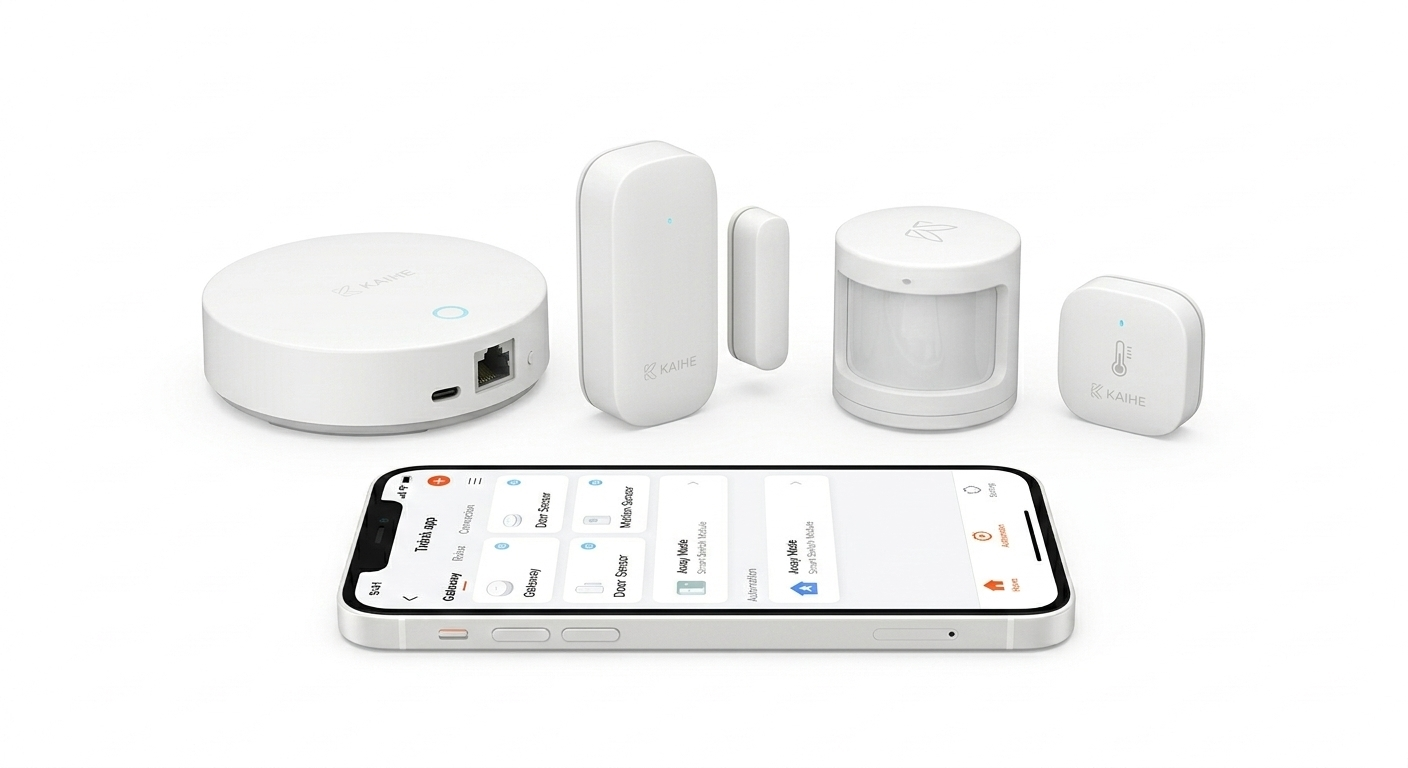
Before picking hardware, you must choose the "Soil." We recommend the Tuya Smart/Smart Life ecosystem for its unparalleled global compatibility.
Interoperability: It supports Matter, Zigbee, and Wi-Fi, allowing thousands of devices from different factories to work in one App.
Cloud Stability: With global servers, it ensures millisecond-level response times for your international end-users.
The biggest mistake beginners make is relying solely on Wi-Fi devices. For a professional setup, a Zigbee 3.0 Multi-mode Gateway is the backbone.
Local Automation: Even if the house Wi-Fi goes down, Zigbee-based devices (like sensors and switches) can still trigger each other locally.
Device Capacity: A single gateway can manage 128+ devices, preventing the home router from being overwhelmed and crashing.
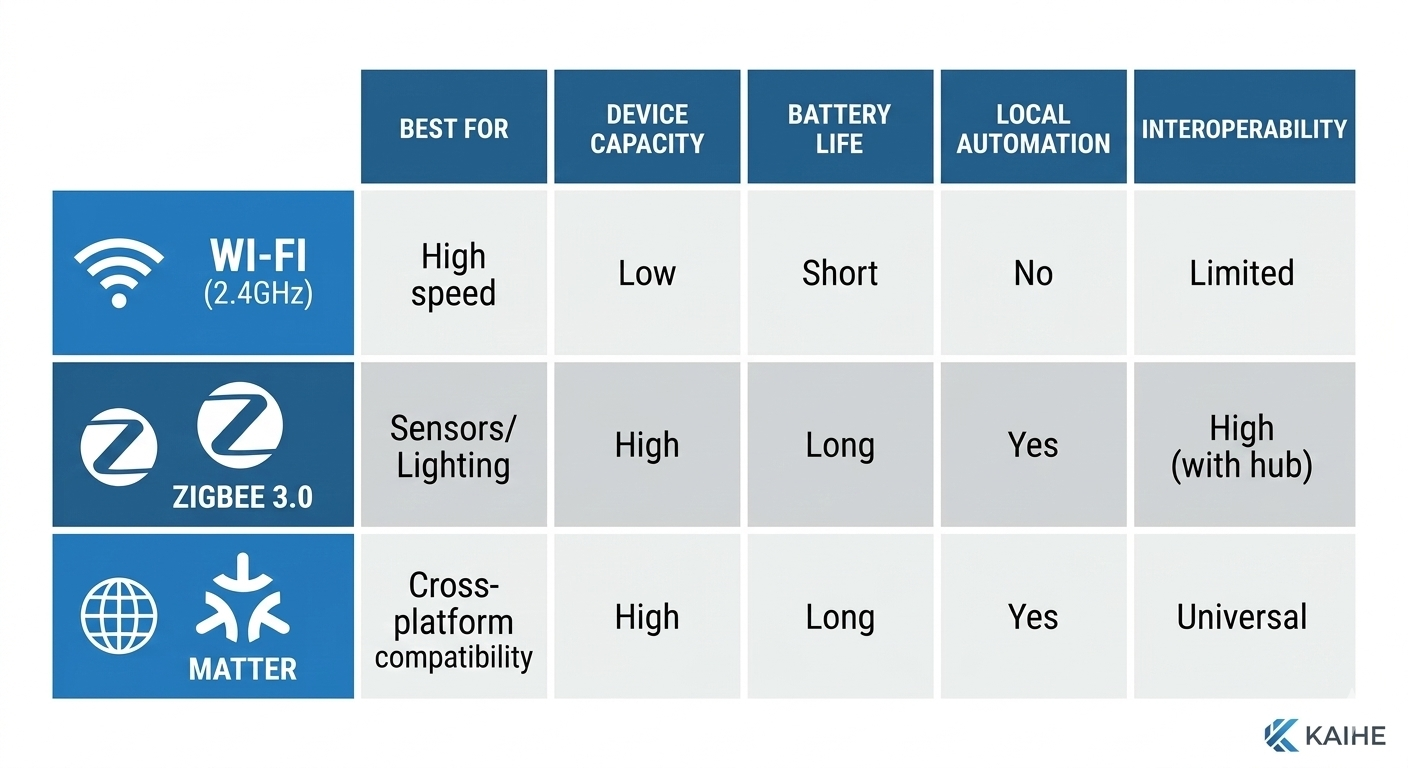
To build a competitive product line, you need to understand the "Wireless Language":
Wi-Fi: Best for standalone devices with high data needs, like Cameras and Video Doorbells.
Zigbee: The "Gold Standard" for low-power sensors and lighting. It creates a Mesh Network, meaning each powered device acts as a signal repeater.
Matter: The 2026 game-changer. It allows your Tuya-based products to be controlled directly via Apple HomeKit, Google Home, and Alexa without complex bridges.
A marketable smart home solution should be presented in three logical layers:
Layer 1: Security (The Hook): Door/Window sensors, PIR motion detectors, and water leak sensors. These are the most frequent "entry-level" purchases.
Layer 2: Comfort & Control: Smart dimmers, curtain motors, and IR blasters for AC control.
Layer 3: Automation Logic: This is where the magic happens. E.g., "If the Door Sensor is triggered after 6:00 PM, then turn on the Hallway Light and set the AC to 24°C."
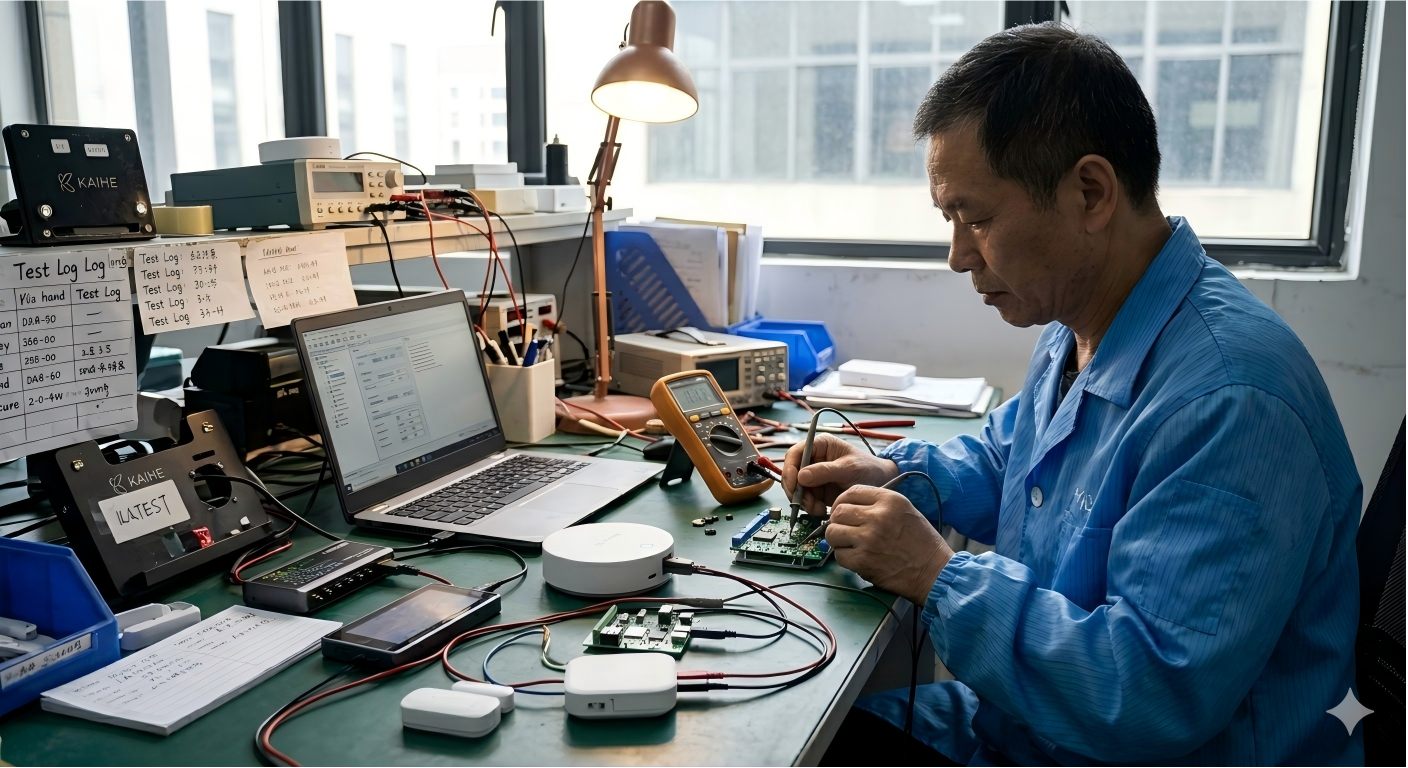
The difference between a "cheap toy" and a "professional system" lies in Verification. At KAIHE, we add value by:
Pre-pairing Tests: Ensuring the firmware of different manufacturers is 100% compatible.
Stress Testing: Verifying signal penetration through walls and long-term connectivity stability.
Building a smart home system is about creating certainty for the end-user. By focusing on Zigbee-based architecture and pre-configured automation logic, you can offer a premium solution that stands out in a crowded marketplace.
Looking to launch your own branded Smart Home Kit?[Contact KAIHE Today] to download our latest Solution Whitepaper and get a customized quote for your e-commerce store.
Contact: Jay
Phone: +86 150 1387 0091
E-mail: jay@kaihesmarthome.com
Add: No. 154, Dalang Street, Longhua District, Shenzhen, China
LiveChatclose
 Send Email
 WhatsApp